

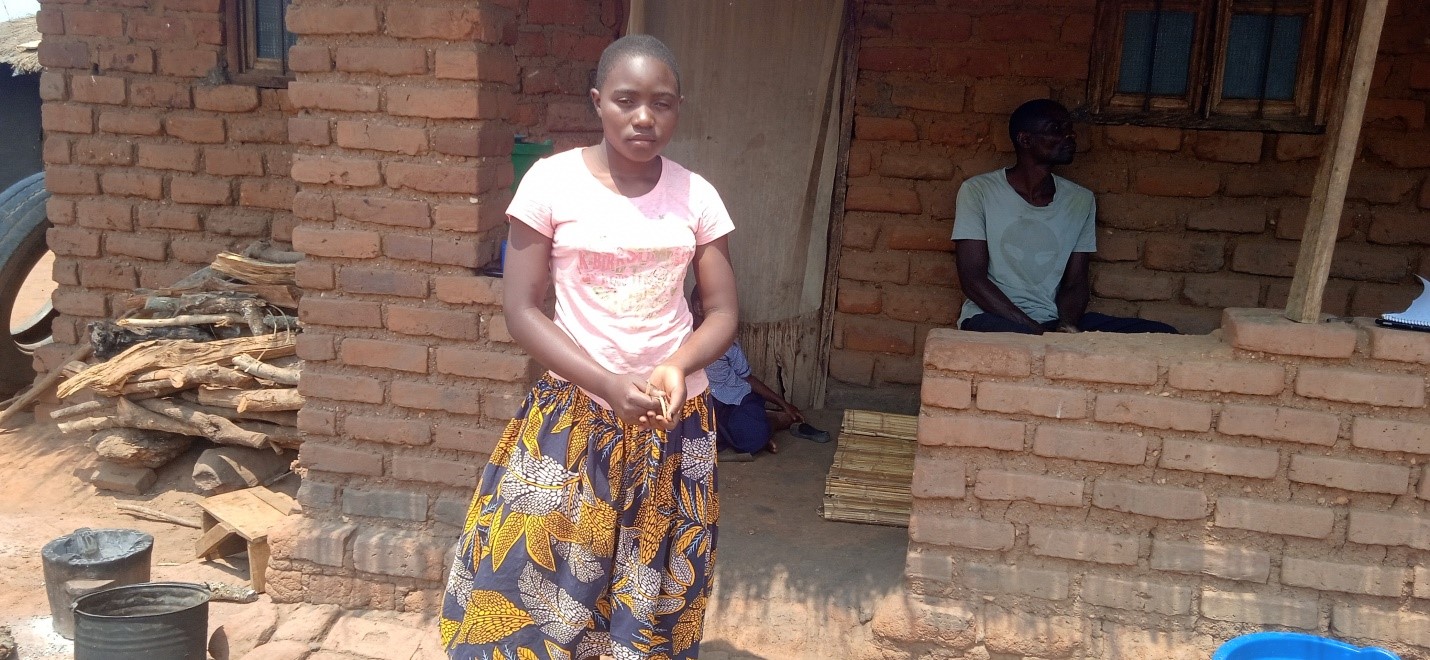
 Miriam Fatson during a home visit
When 15-year-old Miriam Fatson stepped back into a classroom at Mkhalanjoka Primary School in Mvera Zone at the start of the 2025/26 academic year, it marked a powerful turning point in her young life. For Miriam, this was not merely a return to school—it was the reclaiming of a future that had once seemed beyond reach.
Miriam is the youngest of six children from Labvu Village in Traditional Authority Chiwere, Dowa District. Orphaned at a young age, she lives with her elderly grandparents whose limited means make it difficult to meet even basic household needs. In 2024, these hardships forced Miriam to drop out of school while in Standard 8, despite her strong determination to complete her education.
Her situation came to light through the Building a Brighter Future for Girls and Children with Disabilities Project, implemented by DAPP Malawi in collaboration with the Federation of Disability Organisations in Malawi (FEDOMA) and Disability Partnership Finland (DPF), with funding from the Ministry of Foreign Affairs of Finland through UFF Finland. During a community mobilisation exercise, the Project Officer—working alongside the Community Action Coordinator and school-based structures such as the Mother Group—identified Miriam as a vulnerable learner in urgent need of support. A follow-up home visit confirmed her strong desire to return to school if given encouragement and guidance.
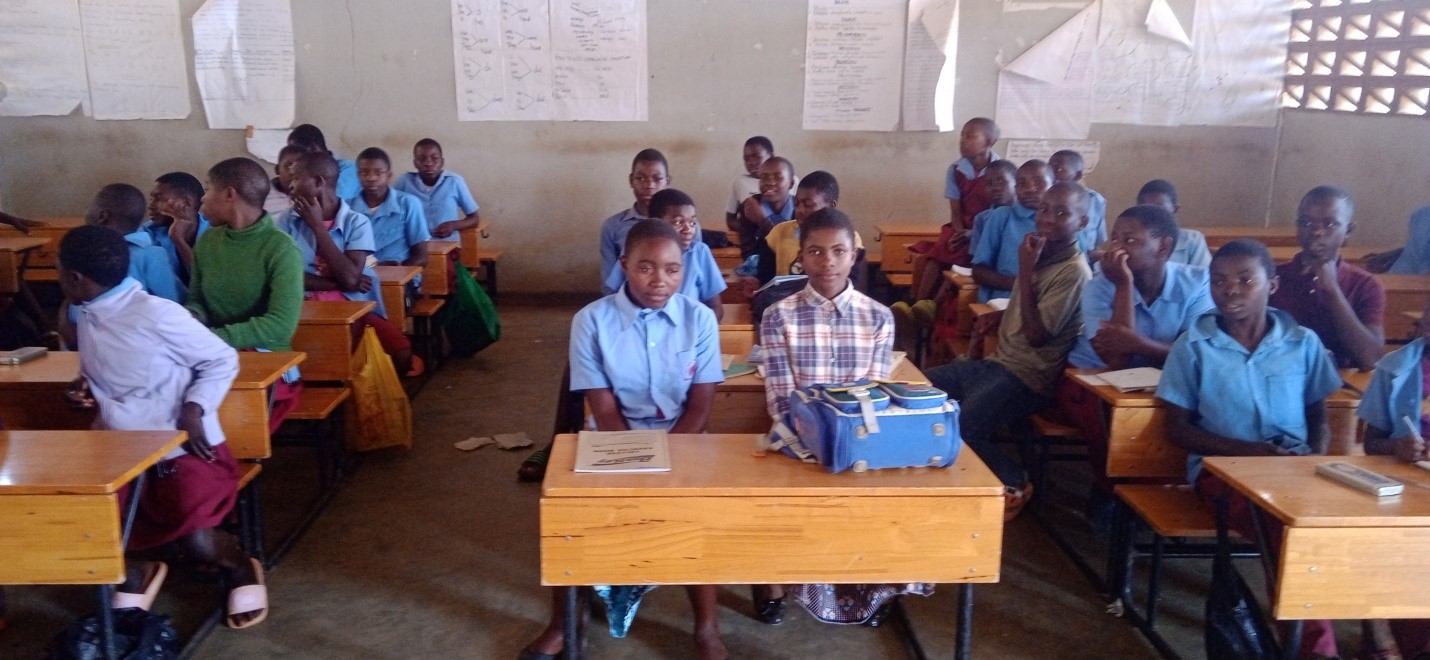 Miriam Fatson back in school along with her classmates
Through sustained mentorship, reassurance, and coordinated support from both school and community structures, Miriam gradually regained confidence and hope. With the full backing of Mkhalanjoka Primary School, she was officially re-admitted at the beginning of the new academic year. The school further committed to providing a safe and supportive learning environment to ensure her continued attendance and well-being.
Today, Miriam is back in class—focused, motivated, and hopeful. She now speaks confidently about completing primary school and progressing to secondary education. Her story demonstrates how donor-supported, community-driven interventions can protect girls from permanent school dropout and ensure that poverty and loss do not define a child’s future.
