


Enabling Malawi’s farmers through Farmers’ Clubs: Cultivating stronger communities, nurturing healthier crops, and safeguarding our environment together.
Agriculture supports the livelihood for most needy Malawians who currently face the effects of climate change. We approach agriculture as a cornerstone for societal development through the adoption of Farmers’ Clubs. This is a concept that organizes and supports smallholder farmers into local clubs (30- 50 farmers) and promotes peer learning as a method to transfer and maintain knowledge on farming and related practices at local level. Through comprehensive training programs, farmers are equipped with the knowledge and skills necessary to optimize crop yields while preserving natural resources.
By promoting climate-smart agriculture and conservation techniques, we help communities to mitigate the effects of climate change and adapt to evolving environmental conditions. We also support them to set up Village Savings and Loans (VSL) groups so that they diversify their income sources and accumulate assets.
Food production is furthermore an integrated part of almost all our projects.


Households with improved food and nutrition security through backyard gardens
Smallholder farmers trained in climate-smart agriculture
Farmers and entrepreneurs linked to structured agricultural markets
Households reporting increased income (proxy based on programme reach)

With the aim to contribute towards poverty reduction, through diversified livelihoods and resilience interventions among beneficiaries in Zomba, Phalombe, Chikwawa and Nsanje Districts we are implementing a village saving & loans project. We have identified and restructured 1,910 existing community based farmer organisations and trained them in village saving & loans schemes and in how to develop a model of enterprises financing based on basic finance principles.
The expected long term impact of the development objective is that group members will have access to financial services & viable market for their products, development of innovation on-farm and off-farm value chains; practice climate smart agriculture; enhance food & nutrition security, and mainstream gender issues
The project is being implemented over a period of 21 months from 1st July 2023 to 31st of March 2025 with funding from IFAD via the Financial Access for Rural Markets, Smallholders and Enterprise Programme under the Ministry of Finance & Economic Development in Malawi. The project is titled “Poverty Reduction of Vulnerable Beneficiaries Through CBFO Support and & Small Scale Enterprise Development” Project’’.

We are working with farmers to increase commercialization of soyabeans, groundnuts and sunflowers for improved and sustainable livelihoods among reaching out to 7000 smallholder farmers and 40 Farmer Based Organisations in Ntchisi and Kasungu districts. Our main activities focus on increasing access to markets of the intended value chains, increasing production and quality of the intended value chains; and enhancing adoption of climate smart agriculture technologies among the participating farmers.
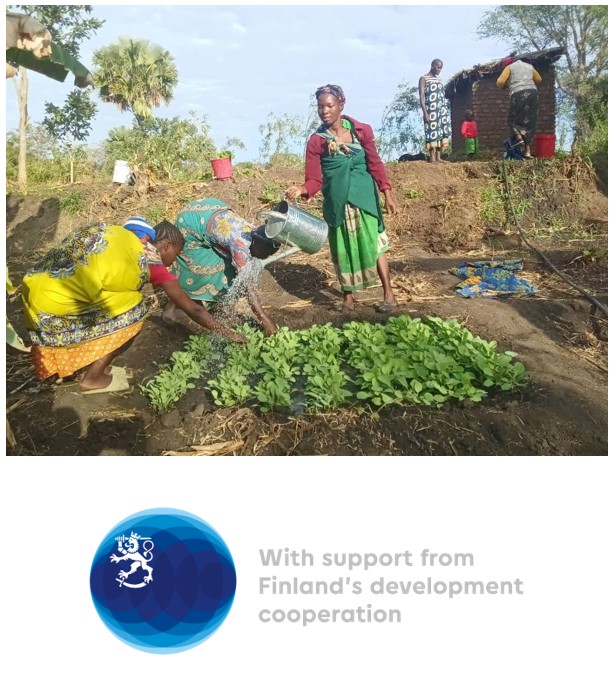
The Sustainable Agriculture for More Income among Smallholders (SAMIS) project, empowers smallholder farmers through climate-smart agriculture, financial inclusion, and market access. We train the farmers in drought-resistant crops, water management, and soil conservation while ensuring inclusion for women, youth, and persons with disabilities. Through Farmers' Clubs and Village Savings and Loans groups, participants gain collective marketing strategies and financial tools. We are working with reached 3,000+ farmers, with 60% being women, improving productivity and incomes. The project fosters sustainable farming transitions, economic resilience, and equitable value chains in Malawi. The project is funded by the Ministry of Foreign Affairs (MFA) in Finland via UFF Finland and implemented by DAPP Malawi together with Malawi Council for Disability Affairs (MACODA) and Disability Partnership Finland over a four-years period ( 2025-2028)

DAPP is implementing a commercialization project with the aim to strengthens soya bean, groundnut, and sunflower value chains in Ntchisi and Kasungu districts to boost smallholder farmers' incomes. The project focuses on market access, production quality, and climate-smart agriculture through Farmer Business Schools, contract farming, and the FO-Cycle Model. Targeting 7,000 farmers, including women and youth, the project establishes 40 Farmer-Based Organizations (FBOs), promotes bulk marketing, and links farmers to financial services.

